Business
Northrop Grumman Signs $3 Billion Missile Defense Production Frameworks
Northrop Grumman signed two seven-year framework agreements worth more than $3 billion to expand PAC-3 MSE and THAAD missile component production.
U.S. economic growth slowed to an annualized 1.5% in the second quarter, according to the Bureau of Economic Analysis advance estimate released Thursday, undershooting expectations and reinforcing a harder backdrop for both equity valuations and bond-market pricing.
Real gross domestic product increased 1.5% in the April-to-June period, down from 2.1% in the first quarter, the BEA said. On a quarter-over-quarter basis, growth was 0.4%. The report pointed to gains in consumer spending, investment and exports, partly offset by lower government spending, while imports increased.
The reading came in below several economist forecasts clustered around the low-2% range. It does not indicate a contraction, but it extends a pattern of moderating growth after a soft 0.5% annualized pace in the fourth quarter of 2025 and a firmer rebound in early 2026.
For investors, the timing matters. U.S. stocks have stayed near record levels even as strategists warn that valuations already discount a strong earnings outlook and a benign macro landing. Slower GDP growth does not by itself derail that view, but it leaves less room for disappointment if corporate earnings weaken or growth-sensitive sectors lose momentum.
That risk is sharper because recent equity gains have come from a narrow set of themes, particularly artificial intelligence and energy-linked names, while broader parts of the market remain exposed to cyclical demand. With forward price-to-earnings multiples on the S&P 500 near historically elevated levels, a cooler growth environment raises the bar for companies expected to sustain strong earnings growth.
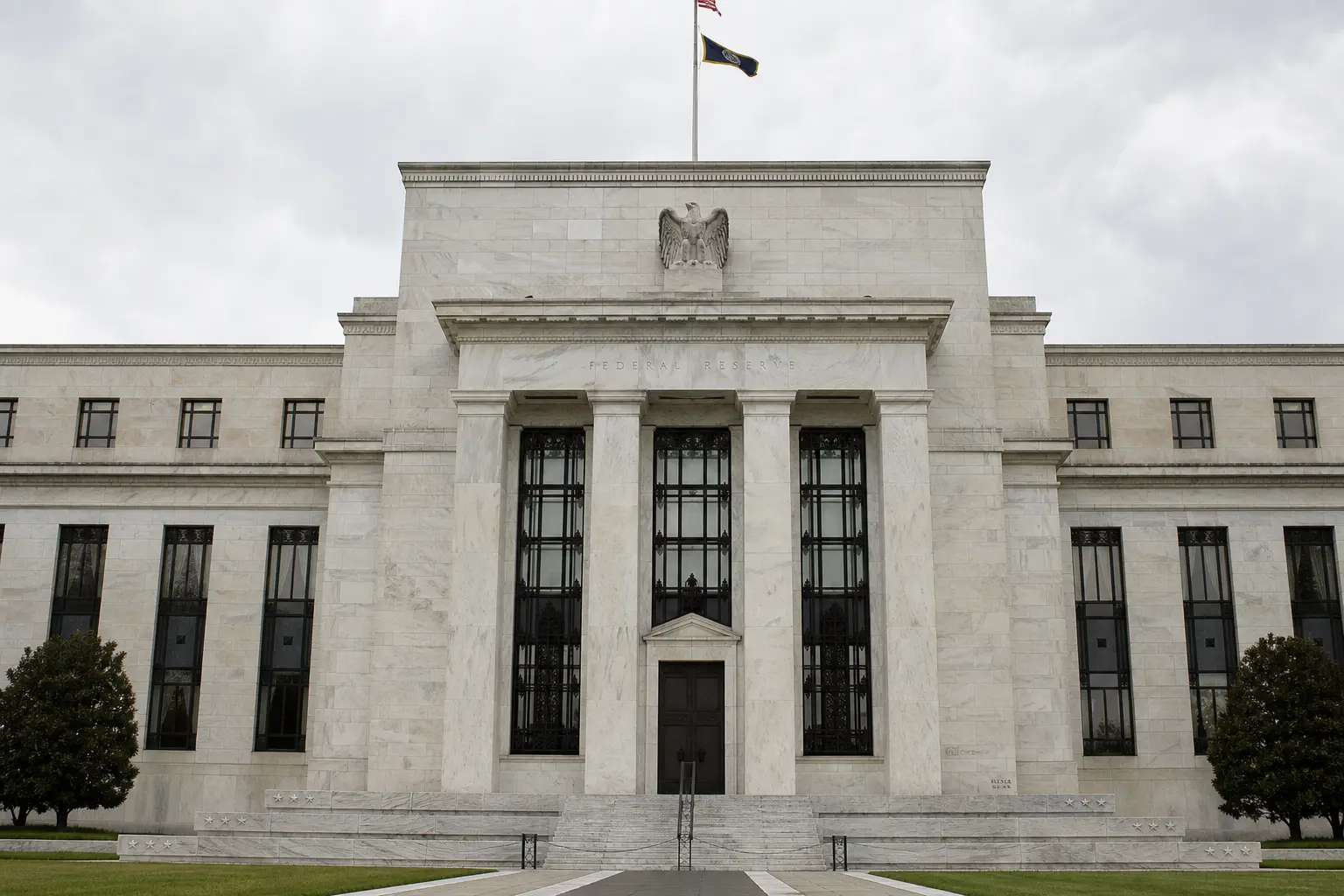
The data also arrives with inflation still above the Federal Reserve's target, limiting how far weaker growth can translate into lower Treasury yields or a clearer path to rate cuts. Recent market commentary has pointed to June core PCE inflation of 3.3% year on year and headline PCE inflation of 3.7%, keeping pressure on policymakers to avoid easing too quickly.
That mix has already reshaped bond-market expectations. Treasury yields rose through much of the second quarter, with the front end moving more than longer maturities and the yield curve flattening as investors pared back bets on multiple late-2026 rate cuts. Some market participants have reopened the possibility of further tightening if inflation proves persistent.
A softer GDP print could revive the case for eventual easing, especially if labor-market data also cools, but the signal is not straightforward. Slower output growth supports lower yields in principle. Sticky inflation and tight credit spreads argue for caution. That leaves rates markets balancing two forces: fading growth momentum and a Fed still constrained by above-target prices.
The economy appears to be moving deeper into a moderation phase rather than toward an immediate recession. For equities, that means earnings will need to do more of the work as valuation expansion gets harder to justify. For bonds, each growth and inflation release carries more weight in shaping the expected path for policy rates and Treasury yields.
If upcoming data confirms that second-quarter weakness was not temporary, both markets may need to reprice assumptions that have so far supported high stock multiples and elevated but orderly bond yields.
Get trusted financial analysis, breaking market news, and expert commentary delivered directly to your inbox every morning.