Business
Raytheon Wins $745 Million MDA Contract for SM-3 IIA Interceptors
Raytheon, an RTX business, won a $745 million Missile Defense Agency contract for SM-3 IIA interceptor production and sustainment through 2031.
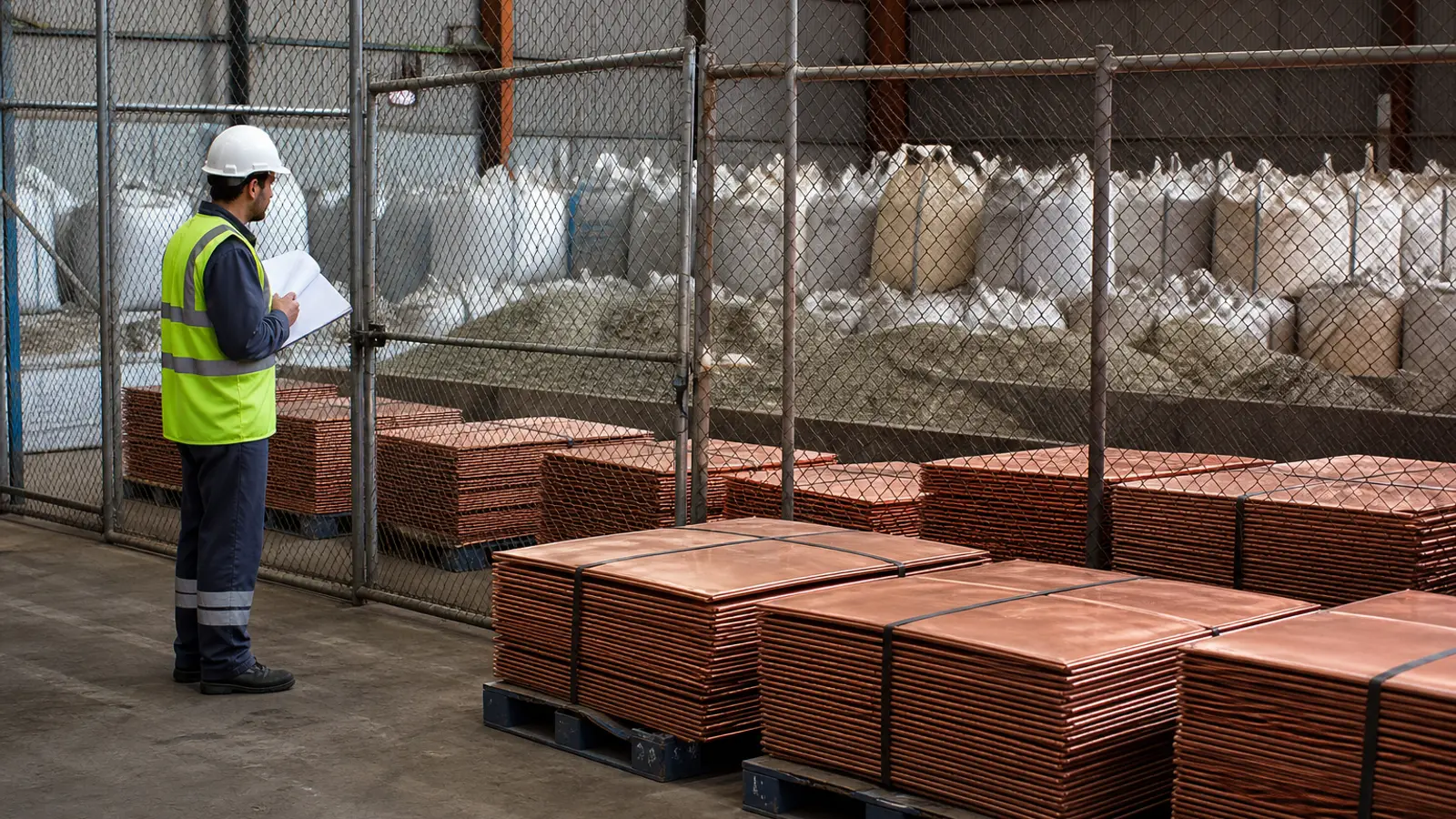
A new policy study is warning that the global push to build strategic reserves of critical minerals may become a source of supply disruption in its own right, adding a new layer of risk for battery makers, defense contractors and commodity investors.
The study, by Hugh Miller and Pau Morandi of the London School of Economics and summarized by the Institute of Materials, Minerals and Mining and the Center for Energy Transition & Exhibition, argues that stockpiling can help cushion short-term shocks but may backfire if major economies act at the same time and without common rules.
Its central finding is that uncoordinated reserve building would intensify competition for scarce materials, raise price volatility and risk triggering the shortages governments are trying to guard against.
The scale is large enough to matter. The study estimates that stockpile demand from seven economies alone could equal as much as 34% of annual global cobalt supply. For lithium, graphite and copper, the same programs could account for more than 10% of annual global supply. A companion CETEx analysis found that if announced programs sought to buy 180 days of net imports, purchases would exceed 10% of global annual supply for all listed products except nickel.
That matters because many of these markets are already tight, opaque and geographically concentrated. Large state purchases made in parallel could absorb material volumes from spot and contract markets, push up prices and distort trade flows, particularly for smaller importers and industrial buyers without direct government backing.
The authors do not argue against stockpiling outright. They describe it as a useful tool for acute disruptions, particularly when supply outages are temporary. But they say it is poorly suited to structural problems such as chronic undersupply, delayed mine development or weak refining capacity. In those cases, stockpiles can offer only a temporary buffer while adding pressure to the market if they are built too aggressively.
The report recommends coordinated purchasing calendars, staggered build schedules and pre-agreed conditions for releasing reserves. It identifies the International Energy Agency as the most suitable institution to lead that effort, citing its existing emergency oil stockpile system and its expanding critical minerals security work. CETEx said IEA members have already asked the agency’s secretariat to strengthen its critical minerals security program, including guidance on stockpile design and responses to supply disruptions.
The warning lands as governments expand minerals security programs across major economies. The U.S. has discussed a much larger strategic reserve effort alongside its existing National Defense Stockpile. Australia has announced plans for a state-backed strategic minerals reserve focused on antimony, gallium and rare earths. The European Union is pursuing a joint reserve of key raw materials, while South Korea, India and Brazil are also stepping up policy support around critical minerals access.
That broad policy push is creating a multi-billion-dollar procurement market. Grand View Research estimates the global strategic mineral stockpiling market was worth about $8.5 billion in 2024 and could reach $14.21 billion by 2033. Fact.MR puts the market at $8.9 billion in 2025.
For investors, the immediate implication is that government buying and release decisions are becoming a market variable alongside mine supply, refining bottlenecks and EV demand. That may support prices during procurement waves, but it also raises the risk of sharper reversals if reserve targets change or stockpiles are released unpredictably. The effect is likely to be felt across upstream miners and refiners, as well as downstream sectors such as electric vehicles, batteries and defense systems that depend on steady access to cobalt, lithium, graphite, copper and rare earth inputs.
Get trusted financial analysis, breaking market news, and expert commentary delivered directly to your inbox every morning.