Business
Raytheon Wins $745 Million MDA Contract for SM-3 IIA Interceptors
Raytheon, an RTX business, won a $745 million Missile Defense Agency contract for SM-3 IIA interceptor production and sustainment through 2031.
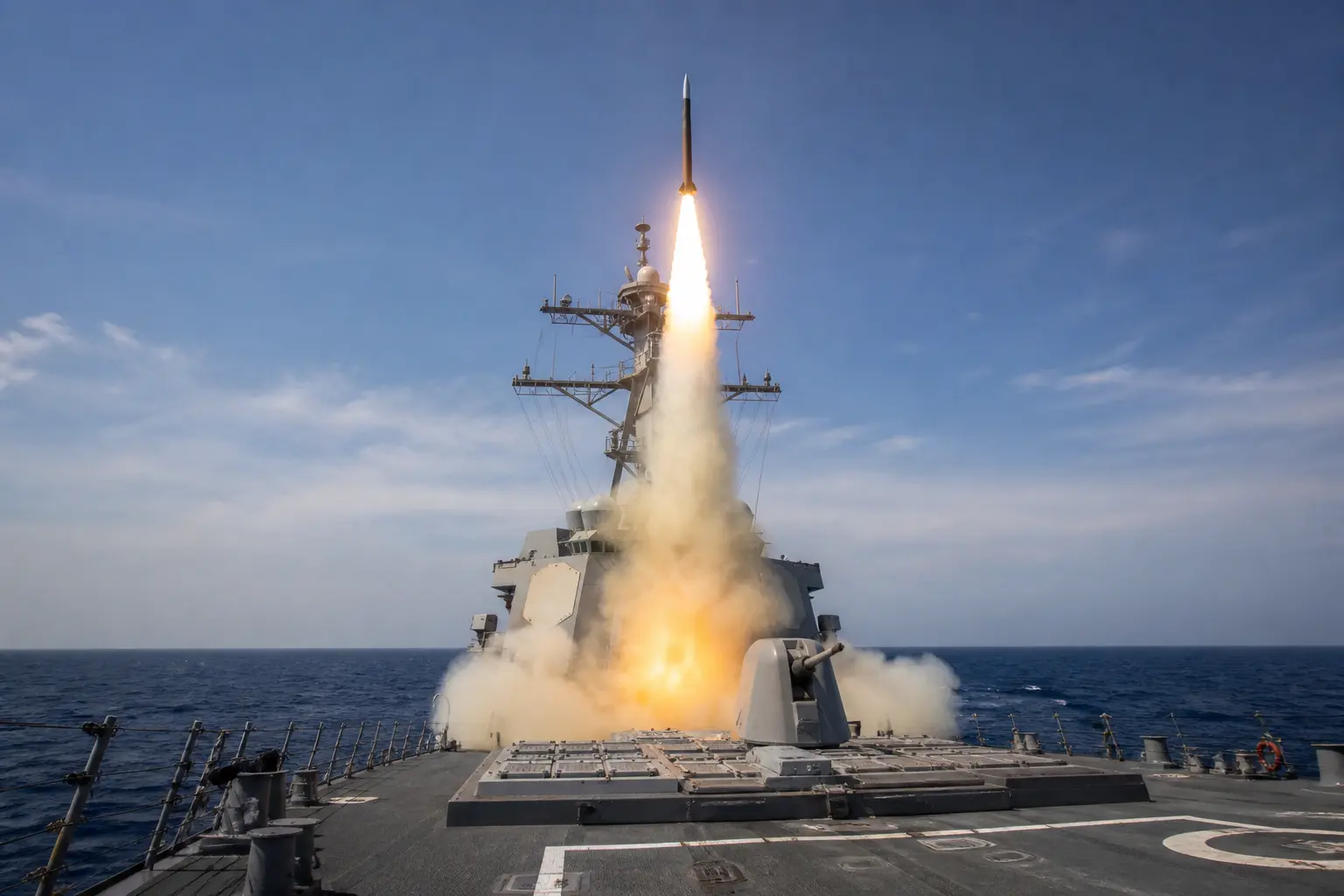
Raytheon, an RTX Corp. (NYSE: RTX) business, has won a $745 million contract from the U.S. Missile Defense Agency to produce and sustain Standard Missile-3 Block IIA interceptors, extending one of the Pentagon's main ballistic missile defense programs.
The award is a noncompetitive, undefinitized contract action with a base value of $745,387,095, according to the Pentagon's daily contracts release. Raytheon will manufacture and assemble SM-3 Block IIA all-up rounds for the U.S. government and for Japan's Ministry of Defense under a foreign military sales case.
Work will be performed in Tucson, Arizona, and Huntsville, Alabama, with an estimated completion date of Feb. 28, 2031. At the time of award, the government obligated $275.6 million in fiscal 2026 procurement funds and $277.7 million in Japanese foreign military sales funds, a combined initial amount of about $553.3 million.
RTX said the contract covers both production and sustainment of the interceptors. The company did not disclose the number of missiles, and public contract documents do not specify unit quantities. Because the award includes sustainment, the total value cannot be used to infer a per-missile price.
SM-3 Block IIA is a naval ballistic missile defense interceptor developed jointly by Raytheon and Japanese industry. RTX says the missile has a larger rocket motor and an enhanced kinetic warhead than earlier variants, allowing faster engagement and wider-area defense against short- to intermediate-range ballistic missile threats.
The order fits a sole-source relationship between the Missile Defense Agency and Raytheon on the program. A June notice on SAM.gov said the agency intended to pursue follow-on production with Raytheon on a sole-source basis, citing only one responsible source able to meet the requirement.
The contract follows RTX's February framework agreements with the Department of Defense to increase production capacity across several missile lines, including SM-3 IIA, SM-3 IB, SM-6, AMRAAM and Tomahawk. Those agreements aimed to raise output and shorten delivery times as U.S. and allied demand for precision munitions stays high.
The financial impact is incremental against RTX's size. The company reported second-quarter sales of $24.7 billion and total backlog of $289 billion as of June 30, including $119 billion in defense backlog. In its quarterly filing, RTX said Raytheon recorded roughly $20 billion in defense bookings during the quarter.
The award adds to that backlog and carries an international dimension, with Japanese funding included at award and Japan's defense ministry named as a direct end customer alongside the U.S. government.
Get trusted financial analysis, breaking market news, and expert commentary delivered directly to your inbox every morning.