Business
Raytheon Wins $745 Million MDA Contract for SM-3 IIA Interceptors
Raytheon, an RTX business, won a $745 million Missile Defense Agency contract for SM-3 IIA interceptor production and sustainment through 2031.
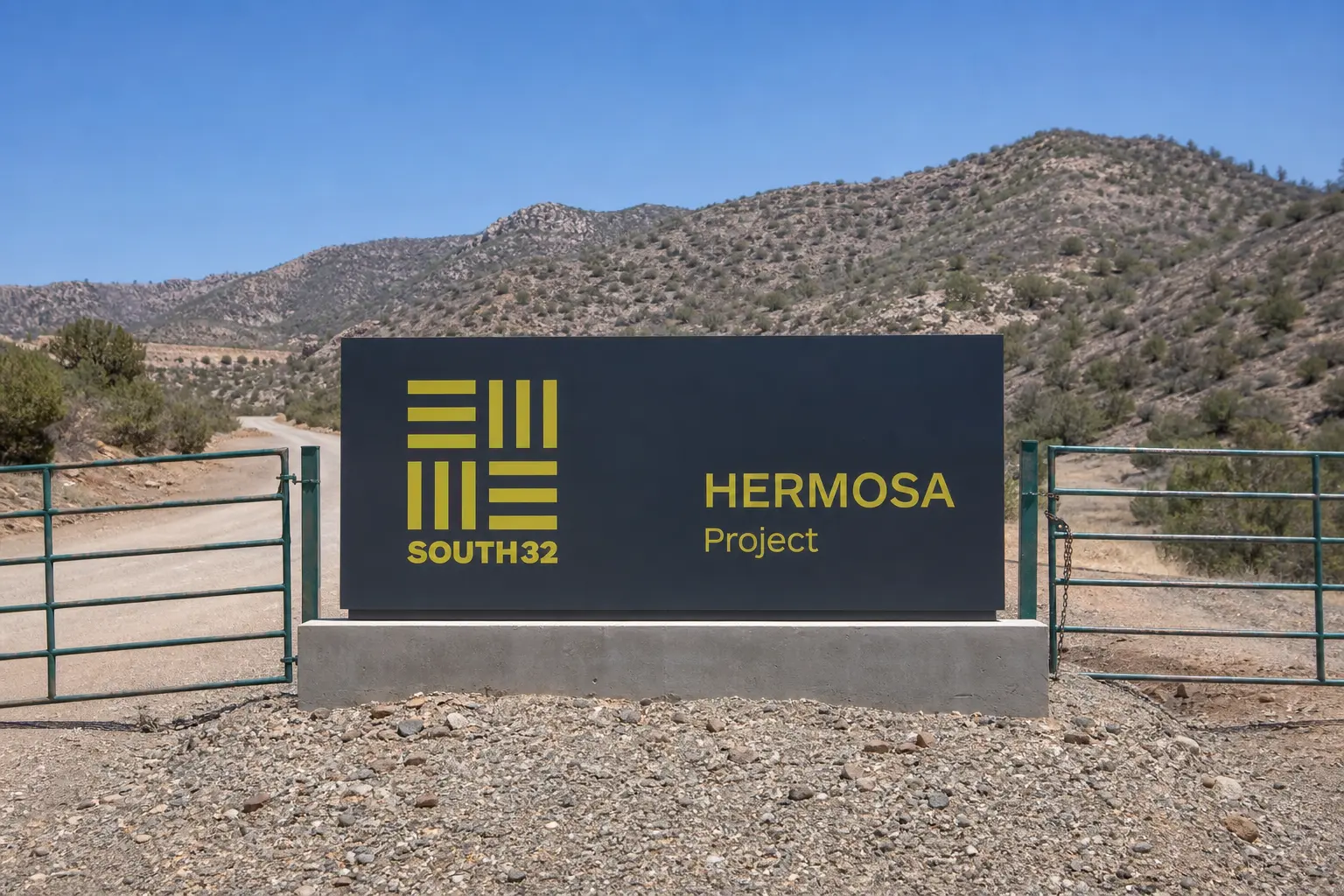
South32 (ASX: S32) has won a final U.S. Forest Service Record of Decision for its Hermosa critical minerals project in southern Arizona, clearing the National Environmental Policy Act review for an expansion onto Coronado National Forest land and removing a major federal permitting obstacle for the project's next phase.
Hermosa is one of the few large-scale U.S. mine developments tied directly to Washington's effort to build domestic supply of critical minerals used in industry, infrastructure and battery supply chains. It is also the first mining project to receive FAST-41 coverage, a federal framework intended to speed permitting for nationally significant infrastructure.
The Record of Decision authorizes several pieces of mine infrastructure on federal land: a primary access road designed to bypass the town of Patagonia, a dry-stack tailings and mine-waste storage facility, and a 138-kilovolt transmission line segment to power the operation. Most of the underground mine sits on private land, but these supporting facilities required federal approval because they cross into the national forest.
The U.S. Department of Agriculture said the Forest Service had completed all FAST-41 milestones for Hermosa and that the decision ends the NEPA process. Coronado National Forest Supervisor Kerwin S. Dewberry said final authorization, subject to financial assurance and submission of the final Mine Plan of Operations, is scheduled for Sept. 4, 2026.
Hermosa is owned by South32 Hermosa Inc., a wholly owned subsidiary of South32, and is centered on the Taylor zinc-lead-silver deposit. The Clark deposit offers battery-grade manganese potential alongside zinc and silver, and the broader district includes further copper-lead-zinc-silver exploration potential.
Cost estimates vary by source and project scope. Federal and earlier company materials have referenced about $2.16 billion of construction cost for the Taylor development, while other recent reports have put the broader project value higher.
South32 has said Taylor is targeting annual nameplate output of about 123,000 tonnes of zinc, 155,000 tonnes of lead and 8.2 million ounces of silver, with first production expected in the second half of fiscal 2028. Federal and company materials describe Hermosa as hosting one of the world's largest undeveloped zinc resources.
Zinc and manganese are both designated critical minerals, and federal agencies have framed Hermosa as part of an effort to reduce dependence on imported supply. Agriculture Secretary Brooke Rollins said the project shows how domestic production can reduce reliance on vulnerable foreign sources and support advanced technologies and essential infrastructure.
The company has said construction on private land is already under way, with some reports indicating infrastructure work is roughly halfway complete.
Risks remain. Environmental reviews identified potential adverse effects on 12 endangered species and impacts on habitat tied to jaguars and Mexican spotted owls. The Forest Service analysis also outlined substantial long-term water use from the local aquifer, and local environmental groups have criticized the approval, raising the possibility of further legal challenges.
The federal decision improves permitting visibility for Hermosa but does not eliminate execution risk. The next test is whether South32 can convert regulatory progress into final authorization, disciplined capital spending and production on schedule.
Get trusted financial analysis, breaking market news, and expert commentary delivered directly to your inbox every morning.