Business
Raytheon Wins $745 Million MDA Contract for SM-3 IIA Interceptors
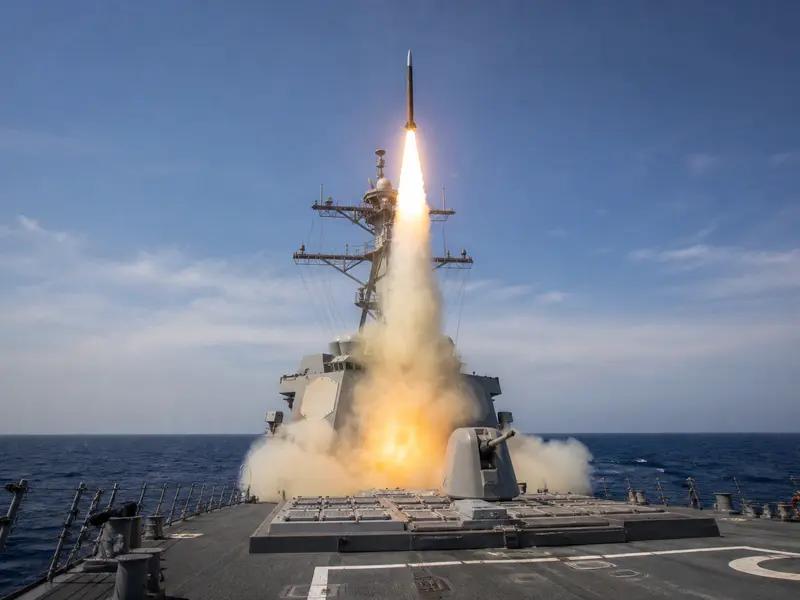
Raytheon, an RTX business, won a $745 million Missile Defense Agency contract for SM-3 IIA interceptor production and sustainment through 2031.
Samsung Electronics (KRX: 005930) reported preliminary second-quarter operating profit of 89.4 trillion won, a roughly 19-fold increase from a year earlier, yet its shares fell sharply as investors used the result to reassess the durability of the AI-chip trade.
Revenue for the April-to-June quarter likely rose 129.3% from a year earlier to 171 trillion won. The operating profit topped the 87.3 trillion won expected in an LSEG poll, and cleared lower local consensus estimates by a wider margin.
The stock still dropped as much as 10.1% intraday in Seoul and closed down 6.9%, erasing more than $80 billion in market value, according to Reuters calculations. Rival SK Hynix fell 6%, pointing to broad pressure across the AI-memory trade rather than a company-specific reaction.
The result extends a record run. Samsung posted about 20 trillion won of operating profit in the fourth quarter of 2025 and 57 trillion won in the first quarter of 2026. The latest quarter exceeded both, and surpassed the company's full-year 2025 operating profit of 43.6 trillion won.
The surge reflects demand for AI-related memory, particularly high-bandwidth memory and server DRAM, where tight supply and higher contract prices have widened margins across the sector. Samsung, the world's largest memory chipmaker, has been a main beneficiary of the global build-out in AI data-center infrastructure.
Some Korean reports said the guidance includes provisions for employee bonuses and that underlying operating profit, excluding those charges, may have been closer to 100 trillion won. Samsung has not yet released a full segment breakdown for the quarter.
For investors, the reaction mattered as much as the numbers. The selloff suggested expectations had run ahead of even record earnings after a steep rally in AI-linked chip stocks. It also showed concern about whether current profits can hold if supply constraints ease or if large U.S. technology companies slow AI infrastructure spending.
That concern has spread beyond Korea. U.S. chip names, including memory and storage companies, came under pressure as investors questioned whether AI-related capital spending can support prevailing semiconductor valuations.
Capacity is another issue. Samsung is spending heavily on chip production and research to strengthen its position in AI memory and narrow the gap with SK Hynix in high-bandwidth memory. That investment supports long-term growth but raises the risk that today's shortages give way to oversupply later in the cycle.
The preliminary figures point to exceptional earnings power in memory while AI demand remains strong. The share-price drop showed that the market is no longer focused only on the size of the beat, but on how much of the cycle is sustainable and how much is already reflected in valuations.
Get trusted financial analysis, breaking market news, and expert commentary delivered directly to your inbox every morning.