Business
Raytheon Wins $745 Million MDA Contract for SM-3 IIA Interceptors
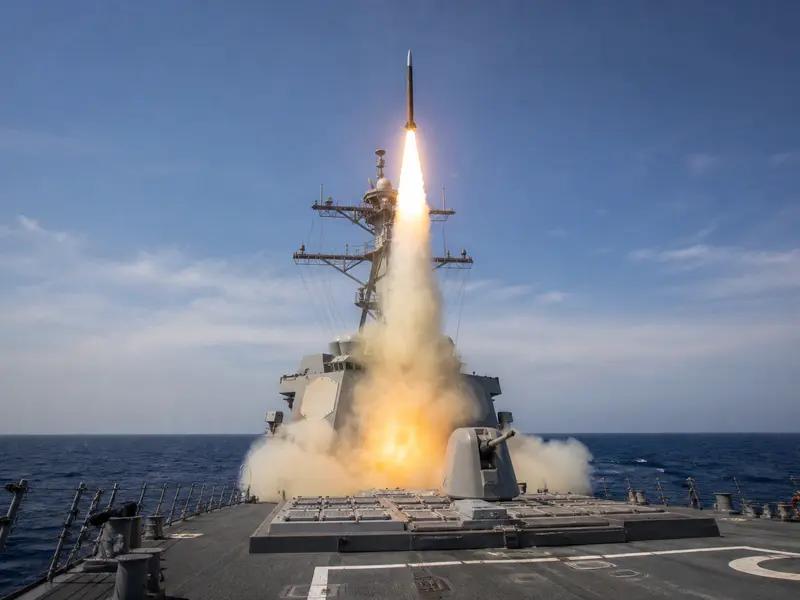
Raytheon, an RTX business, won a $745 million Missile Defense Agency contract for SM-3 IIA interceptor production and sustainment through 2031.

Germany will buy U.S.-made Tomahawk cruise missiles and station them at home, Chancellor Friedrich Merz said, giving Berlin a ground-based long-range strike capability it does not now field.
Merz told the Bundestag the agreement with the United States would "close an important strategic gap" in Germany's defense. He said the understanding was reached on the sidelines of the NATO summit in Ankara this week.
The missiles are intended to be based in Germany rather than held for transfer elsewhere. Public reporting indicates the package will also require ground launchers, likely the U.S. Army's Typhon system, to fire them from land. Germany has previously sought the ground-launched configuration as part of a broader effort to expand its deep-strike options.
The next formal step appears to be U.S. approval for the sale in August 2026. Reporting to date describes the arrangement as an agreement in principle rather than a completed procurement contract. The number of missiles, contract value and delivery timeline have not been disclosed.
That leaves the commercial impact hard to quantify. RTX Corporation (NYSE: RTX) is the clearest listed company tied to the missile in public reporting on the proposed sale. Any estimate of revenue or production volume would be speculative until Washington releases a formal approval notice or Berlin publishes contract details. Reporting on the launcher side has not identified a listed prime contractor for this transaction.
Tomahawk is a long-range, subsonic cruise missile designed to hit targets deep inside hostile territory. The Associated Press cited a range of about 1,600 kilometers, or 1,000 miles. A separate analysis by the German Institute for International and Security Affairs, or SWP, has described some Tomahawk configurations as reaching as far as 2,500 kilometers. Those differences reflect varying versions and basing concepts. Either way, the system would extend Germany's ability to hold distant targets at risk.
The purchase fits into a wider NATO planning effort. In July 2024, the U.S. and Germany announced plans for U.S. long-range fires to be deployed in Germany from 2026, including Tomahawk, the SM-6 and the Long-Range Hypersonic Weapon. That framework was aimed at strengthening conventional deterrence against Russia. More recent reporting has raised doubts about whether the earlier U.S. deployment plan will proceed as first outlined, increasing the importance of a direct German procurement.
For Berlin, the immediate objective is military rather than industrial. Merz said Germany would also pursue its own European systems and base them in Europe, suggesting the Tomahawk decision is both a stopgap and a bridge toward a broader sovereign capability.
The financial value of this specific deal remains unclear until quantities, launchers and delivery schedules are made public.
Get trusted financial analysis, breaking market news, and expert commentary delivered directly to your inbox every morning.