Business
Raytheon Wins $745 Million MDA Contract for SM-3 IIA Interceptors
Raytheon, an RTX business, won a $745 million Missile Defense Agency contract for SM-3 IIA interceptor production and sustainment through 2031.
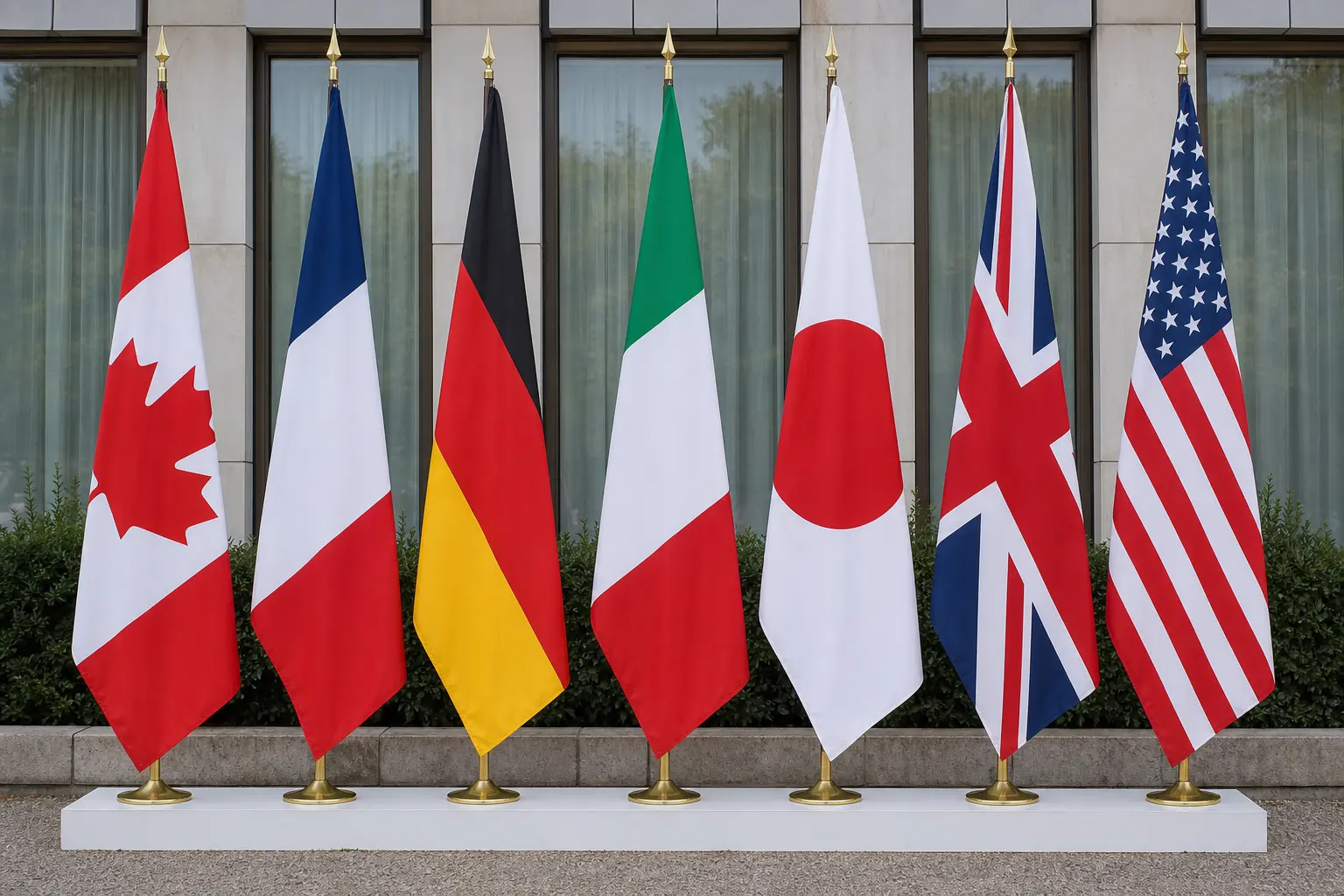
The Group of Seven set a quantified target this week to cut its dependence on a single external supplier of rare earths and permanent magnets, broadening policy support for processing, recycling and stockpiling.
In a leaders' declaration issued at the 2026 summit in Évian, France, the G7 said it aims to reduce reliance on any one supplier outside the G7 and partner countries for rare earths and permanent magnets to below 60% by 2030, with an ambition to reach 50% as soon as possible after that. Ministers should set comparable dependency-reduction targets for other critical minerals before year-end, the bloc said.
Rare earths and permanent magnets are central to electric vehicles, wind turbines, defence systems and advanced manufacturing, yet supply chains remain heavily concentrated. For miners, processors and recyclers, the declaration signals a more coordinated policy backdrop for projects serving allied supply chains, though it stops short of binding subsidies or guaranteed pricing.
Leaders said they will coordinate within the bloc and with partner countries to build processing and industrial capacity, support local value creation and promote innovation across the critical minerals chain.
They also committed to cooperate on production, processing and recycling projects, using demand aggregation and combined public and private financial capacity. That language points to possible support not only for mine supply but for downstream processing and midstream manufacturing, which have often been harder to finance outside dominant supply hubs.
The G7 said it would establish a joint cooperation mechanism, with support from the International Energy Agency and its data environment, to improve supply-crisis anticipation and management and help prevent price instability. Leaders committed to build stockpiling capacity where appropriate in the industrial or public sector.
The declaration calls for harmonised, interoperable traceability mechanisms for critical minerals origin, drawing on work by the OECD and IEA. It also says the bloc will set recycling targets by year-end for selected critical minerals or derivatives, aiming for collective recycling capacity to supply a significant share of annual G7 consumption by the end of 2030.
The initiative includes a non-binding G7 Critical Minerals Resilience and Production Alliance, building on the Critical Minerals Production Alliance launched under Canada's G7 presidency in 2025. Canada has said that earlier alliance, represented by envoys from each G7 country, was designed to accelerate projects with trusted partners, reduce vulnerability to concentrated supply and support advanced manufacturing and defence needs. Ottawa also said it announced a first round of 26 strategic investments, partnerships and measures under that framework in October 2025.
For investors, the key question is execution. The 60% target and the mechanisms on traceability, stockpiling, recycling and crisis coordination add specificity that may improve the financing case for projects able to demonstrate secure sourcing, processing capability and traceable supply into allied markets.
But the framework is non-binding. It does not create price floors, direct subsidy commitments or guaranteed procurement. Its market impact will depend on whether governments and industry turn the statement into funded projects, offtake agreements, processing buildouts and recycling capacity over the next several quarters.
Get trusted financial analysis, breaking market news, and expert commentary delivered directly to your inbox every morning.