Business
Raytheon Wins $745 Million MDA Contract for SM-3 IIA Interceptors
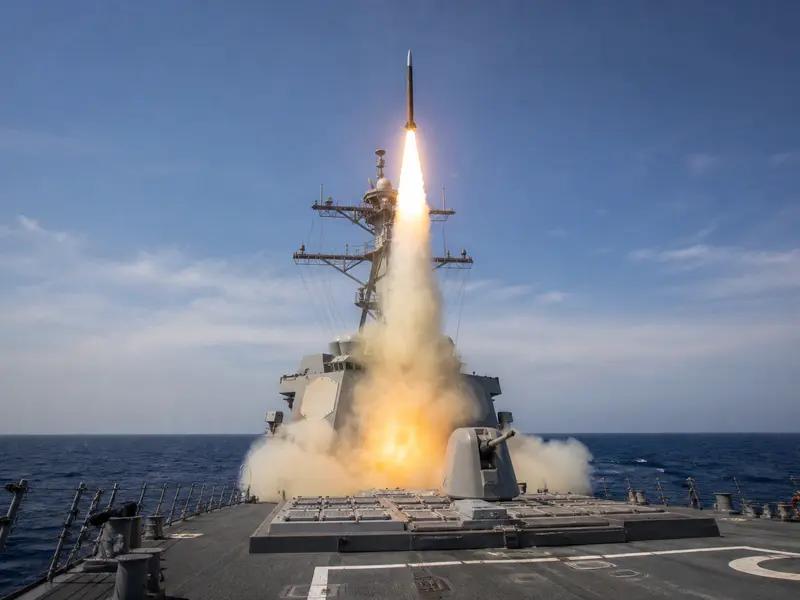
Raytheon, an RTX business, won a $745 million Missile Defense Agency contract for SM-3 IIA interceptor production and sustainment through 2031.
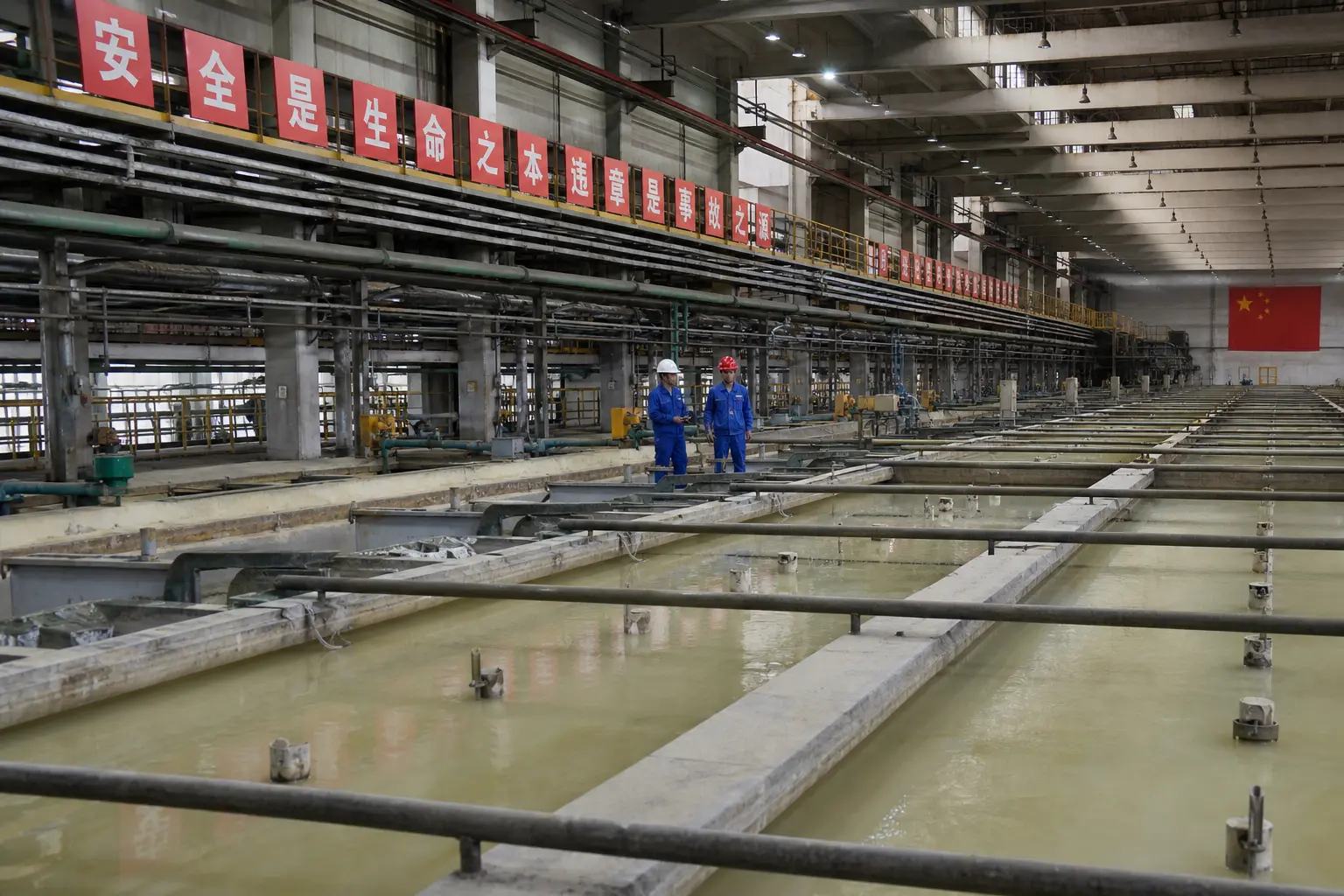
China's dominance in refining, rare-earth magnets and battery materials is concentrated at the stages Western industry cannot replace quickly, giving Beijing leverage over defense, autos and clean-energy manufacturing that mine diversification alone does not solve.
China's grip on critical minerals is strongest where Western industry is weakest: not mainly at the mine, but in the processing plants, separation circuits, chemical conversion facilities and magnet factories that turn ore into usable industrial input. That is what makes the imbalance a chokehold rather than a market lead.
The argument rests on two facts. China holds commanding share across the midstream stages of several critical-mineral chains, and it has shown it will use that position through export controls and licensing systems. Together those facts matter more than mine ownership, because a manufacturer can diversify ore supply and still remain exposed if the economically viable route from concentrate to finished material runs through China.
Western policy still often treats critical minerals as a mining problem. The harder problem is what happens after extraction. Midstream capacity takes years to permit, finance, build, qualify and scale, and those years matter because the downstream customer in defense, batteries and power equipment cannot switch overnight.
The International Energy Agency's 2025 Global Critical Minerals Outlook says China is the dominant refiner for 19 of the 20 minerals it tracks, with an average market share of about 70%. The same report says that from 2020 to 2024, around 90% of supply growth came from the top single supplier alone, including China for cobalt, graphite and rare earths. Concentration is not just a legacy of old investment. In several chains, new capacity has accrued to the same dominant player.
Other estimates differ in detail but point the same way. Goldman Sachs Research puts China at 68% of global cobalt refining, 65% of nickel and 60% of lithium suitable for EV batteries, while Brookings estimates 73% for cobalt, 68% for nickel and 59% for lithium. Chatham House makes the broader point that China extracts, processes or controls more than 70% of the world's cobalt and lithium and nearly all graphite on the market.
The practical consequence is straightforward. A Western battery maker may source raw material from Australia, Africa or the Americas and still depend on Chinese conversion into lithium chemicals, refined cobalt, graphite anode material or magnet rare earths. The leverage sits in those conversion steps because they are capital-intensive and hard to replicate quickly.
China dominates refining across the critical minerals chain
Selected estimated shares of global refining or downstream processing
Source: IEA, Goldman Sachs Research, Brookings Institution.
Rare earths, especially heavy rare earths and permanent magnets, are the clearest example because they combine strategic end uses, high processing concentration and few near-term substitutes at scale.
The IEA estimates China accounts for 61% of global rare-earth production and 92% of processing. At the next step in the chain, the concentration is tighter. Goldman Sachs puts China's share of rare-earth magnet manufacturing at 92%, while Columbia research says neodymium-iron-boron magnets account for more than 90% of the permanent magnet market and China produces 94% of global sintered NdFeB output.
Magnets are the industrial form in which rare-earth dependence shows up. The steps from oxide to metal, alloy and finished magnet are also concentrated in China. A country can add mine output and still remain exposed if it cannot make the magnet that goes into the motor, guidance system or turbine.
Heavy rare earths make the dependency more acute. The Council on Foreign Relations describes China's position in heavy rare earths used in high-performance permanent magnets as one of the most consequential choke points in critical minerals, and says the United States faces near-total dependence on China for the heavy rare earth elements required for those magnets. Chinatalk analysis cited in the research notes puts Chinese production dominance in heavy rare earths at 99%.
These minerals sit inside precision weapons, fighter aircraft, submarines, drones, radar systems, electric vehicles, hard drives and offshore wind turbines. In those applications, a shortage of refined heavy rare earths or finished magnets can halt production regardless of how much ore exists elsewhere.
China's rare earth bottleneck extends beyond mining
Estimated shares of the global rare earth and magnet chain
Source: IEA, Goldman Sachs Research, Columbia University research.
If rare earths are the clearest defense vulnerability, graphite and battery chemicals are the larger-volume industrial one. Here too the dependency is concentrated in processed material rather than raw ore.
IEA-linked analysis cited by Mine magazine says China produces about 99% of battery-grade graphite and more than 60% of lithium chemicals, and accounts for about 70% of refined cobalt. Chatham House says China controls nearly all graphite on the market. Proteus Group analysis cited in the notes puts Chinese control of spherical graphite production at 99% and battery cathode precursor output above 95%.
That has a specific consequence for manufacturers. Graphite is not optional in the dominant battery chemistries, and battery-grade graphite is not the same as mined graphite. The feedstock must be purified, shaped and upgraded to battery specifications. The same logic applies to lithium and cobalt. Ore and brine are only the beginning; the customer needs chemical-grade input that qualifies for use in cells.
Mine diversification by itself does not remove dependence. It can change who extracts the raw material, but not who upgrades it into the anodes, cathode precursors and battery chemicals that determine whether a gigafactory can run on time and on budget.
China's battery-materials leverage sits in processed inputs
Selected estimated shares of battery-grade and refining capacity
Source: IEA-linked Mine analysis, Brookings Institution, Proteus Group.
Market share alone does not prove strategic leverage. The stronger case is that China has shown it will convert industrial dominance into policy leverage.
That evidence is now substantial. Financial Times reporting summarized China's approach as a licensing system under which Beijing can decide who gets which minerals. Since 2023, according to that reporting, China has imposed export restrictions across a range of niche metals. Reuters reported in 2026 that China publicly defended its critical-minerals export controls after criticism from the G7, framing them as security measures.
Policy institutions have become more explicit. The European Union Institute for Security Studies calls critical raw materials a weapon Beijing can wield. The Foundation for Defense of Democracies says concentration at the processing and refining stages is where strategic leverage is greatest, and that China has proven willing to exploit the resulting vulnerabilities. RAND says China has used its disproportionate market share in rare earths to manipulate availability and pricing outside China.
That distinction is central. A dominant supplier can be merely efficient. A dominant supplier that can license access, restrict exports and shape pricing for political reasons becomes a structural risk to customers.
The leverage is most acute in defense because qualification cycles are long, specifications are narrow and substitution is difficult.
Rare earth magnets and related inputs are embedded in missile guidance, sonar, radar, jet engines and precision munitions. CFR highlights their role in precision weapons, turbines and drones. The Diplomat points to fighter jets, submarines and cruise missiles. The Wall Street Journal reported that Chinese restrictions on critical minerals have caused production delays for Western defense contractors and forced companies to search globally for replacement supply.
The mechanism is simple. A delayed shipment of magnets, oxides or specialty metals does not affect only one supplier. It can stall a far larger production line because defense primes cannot easily requalify materials, redesign components or substitute inferior inputs without delay. Control of a small-volume but indispensable processed material can create outsized leverage over a much larger weapons program.
This is one reason the issue has moved from think-tank analysis into formal policy language, including a U.S. congressional hearing titled "Breaking China's Choke Hold on Critical Minerals."
China's dominance did not emerge from geology alone. It was reinforced by state finance, industrial policy, overseas asset acquisition and the build-out of domestic processing.
Brookings says China controls most global critical-minerals refining and is increasing upstream control of raw commodities. AidData figures cited by the National Association of Manufacturers show Chinese policy and commercial banks issued $57 billion in loans from 2000 to 2021 for mining and processing copper, cobalt, nickel, lithium and rare earths in 19 low- and middle-income countries. More than three-quarters of that state-backed lending went to Chinese-owned ventures.
That created a reinforcing system. Chinese firms secured ore access abroad, Chinese refiners secured feedstock at home, and downstream manufacturers gained dependable material supply. CSIS adds another mechanism: Chinese companies have at times flooded markets with excess supply and weak pricing, undermining non-Chinese projects and discouraging rival capital formation.
The chokehold is not just a snapshot of current market share. It is embedded in cost curves, financing structures, processing know-how and customer qualification relationships, all slower to change than mine ownership statistics.
The United States, Europe, Japan, Australia and Canada have all moved to back domestic projects, sign supply agreements and fund non-Chinese processing. The G7 has set a goal of reducing dependence on Chinese rare-earth processing and permanent magnets to below 60% by 2030.
That effort is real. It is also a long way from independence.
Benchmark Mineral Intelligence, cited by Reuters, expects the West still to depend on China for 91% of heavy rare earth needs by 2030, down only modestly from 99% in 2024. Bloomberg reported that Chinese dominance in heavy rare earths essential to military technologies is expected to persist at least into the mid-2030s. Chatham House still describes China as the leading refiner of 19 of the 20 most important industrial minerals.
The gap between those targets and those forecasts matters. Even if the G7 lowers dependence materially, China would still retain majority share in some of the most sensitive parts of the chain. The likely near-term result is not a clean break, but partial diversification in selected light rare earths and battery materials while the hardest bottlenecks remain in heavy rare earths, magnets and battery-grade graphite.
Heavy rare earth dependence is projected to stay high
Western dependence on China for heavy rare earth needs
Source: Reuters citing Benchmark Mineral Intelligence.
The immediate risk is not that the West runs out of every critical mineral. The more likely risk is episodic scarcity in specific refined products, political rationing, procurement delays and structurally higher costs as companies build parallel supply outside China.
That reaches well beyond miners. It affects defense primes, automakers, battery makers, wind-turbine manufacturers and industrial groups whose capital plans assume reliable access to magnets, graphite, lithium chemicals, cobalt and other processed inputs. It also affects working capital and margins. A company that must carry more inventory, qualify backup suppliers or buy from higher-cost non-Chinese processors is absorbing a direct operating cost, not a theoretical geopolitical problem.
For markets, the central point is structural. China dominates the parts of the supply chain the West cannot replace quickly, and in several categories those bottlenecks are expected to persist well into the next decade.
A chokehold in critical minerals does not require control of every mine. It requires control of the indispensable steps between ore and industry. On the evidence in refining, magnets, graphite and heavy rare earths, China still has that control.
Get trusted financial analysis, breaking market news, and expert commentary delivered directly to your inbox every morning.